New York law firms taking new space, moving between buildings or reworking a floor they already lease can have the entire technology side delivered by ClearMax technicians as a single project: structured cabling, WiFi with a separate network for visitors, conference room screens, badge readers on the doors that matter, cameras at the entries, and the server and workstations at the end of it. A written scope, a schedule matched to the landlord and the general contractor, and no monthly commitment.
Last updated: November 2026
- 1Read the drawings. Every jack, access point, reader, camera and the network closet are placed on the architect's plan.
- 2Scope it in writing. One document lists the work, the building's conditions and the permits involved.
- 3Install with the trades. Cable and door wiring at rough-in, devices after paint, scheduled around the building's work hours.
- 4Test and hand over. Each cable, door and camera checked, and the full record given to the firm.
The firms this site is written for
Most New York law firms are not large. Many have a few partners, a handful of associates, paralegals, a receptionist and an office manager who also handles the landlord, the copier lease and the phones. They have no IT department. Their network was installed by whoever was available when they last moved, and the person who knows the passwords may no longer work there.
When a lease is signed, that firm has a fixed date and a long list of contractors. It needs one party to take the architect's plan, work out where every cable, access point, reader and camera belongs, deal with the building's rules and the trades on site, and leave an office that works on the first morning, along with a record of exactly what was installed.
What a law office buildout includes
- Structured cabling and WiFi: data runs to every attorney's office, the conference rooms, reception, assistant stations and each multifunction printer, and ceiling access points carrying a firm network and a guest network that never meet.
- Access control: badge or fob readers on the office entrance, the file room and the network closet, each door locked in a way the New York City Building Code allows.
- Security cameras: the entrance, reception and the doors to the file room and closet, with sound off and no camera in any room where a client speaks with a lawyer.
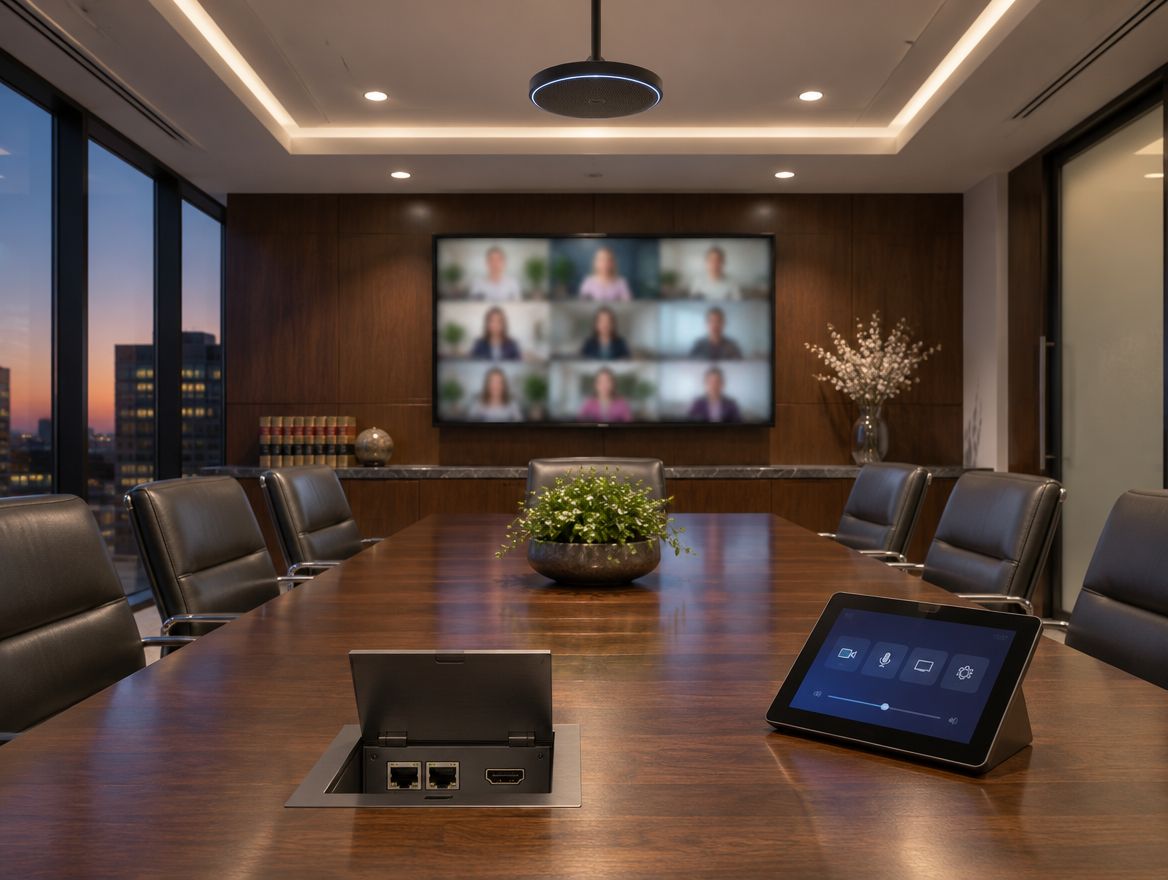
- Conference room screens: displays, video bars and the cabling behind the wall, so a deposition or a closing runs on a wire rather than on luck.
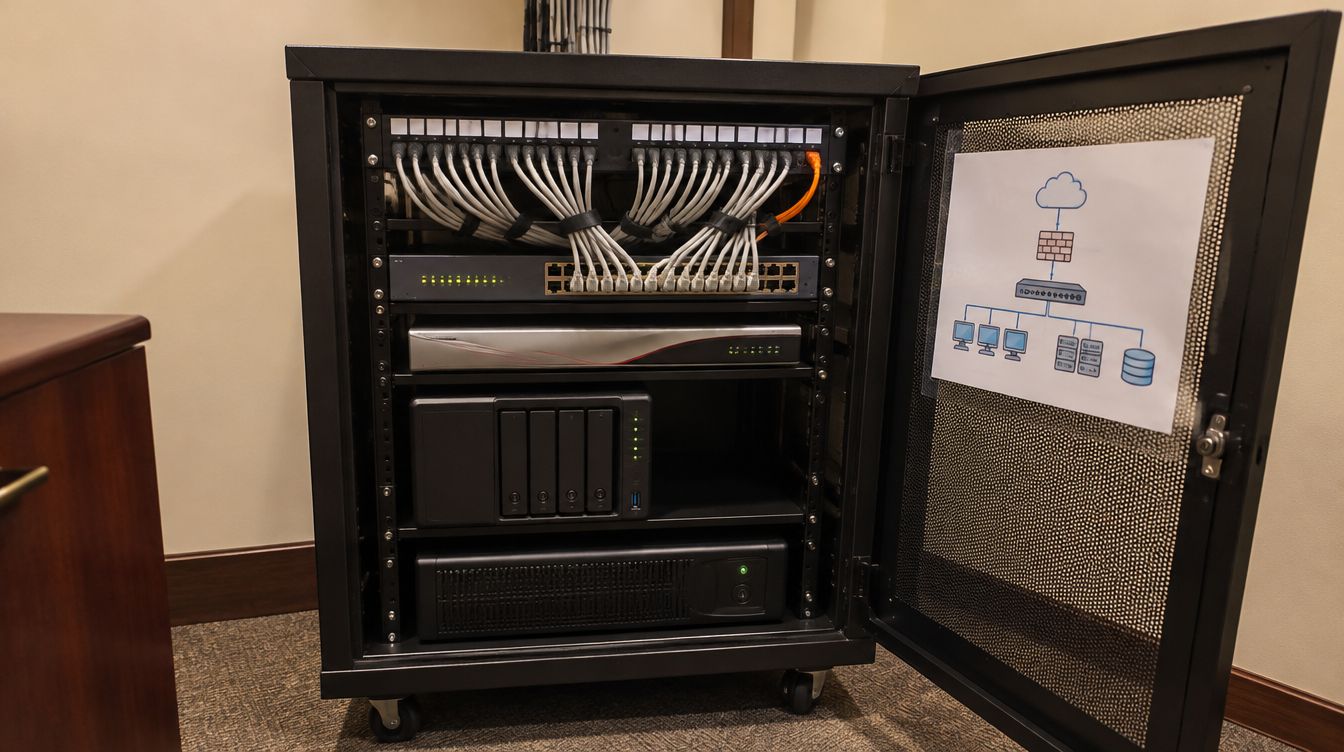
- The network closet: patch panels, switch, firewall and battery backup, behind a door with its own reader and log.
The server and the workstations
These come last because they depend on everything else. Two choices shape them. The first is where the firm's documents and matter files will live: on a server in the new closet, or with a hosted service. The second is whether the existing computers make the move or are replaced. Those answers decide the size of the closet and its battery, the internet service the firm orders from the building's providers, and how the move weekend runs.
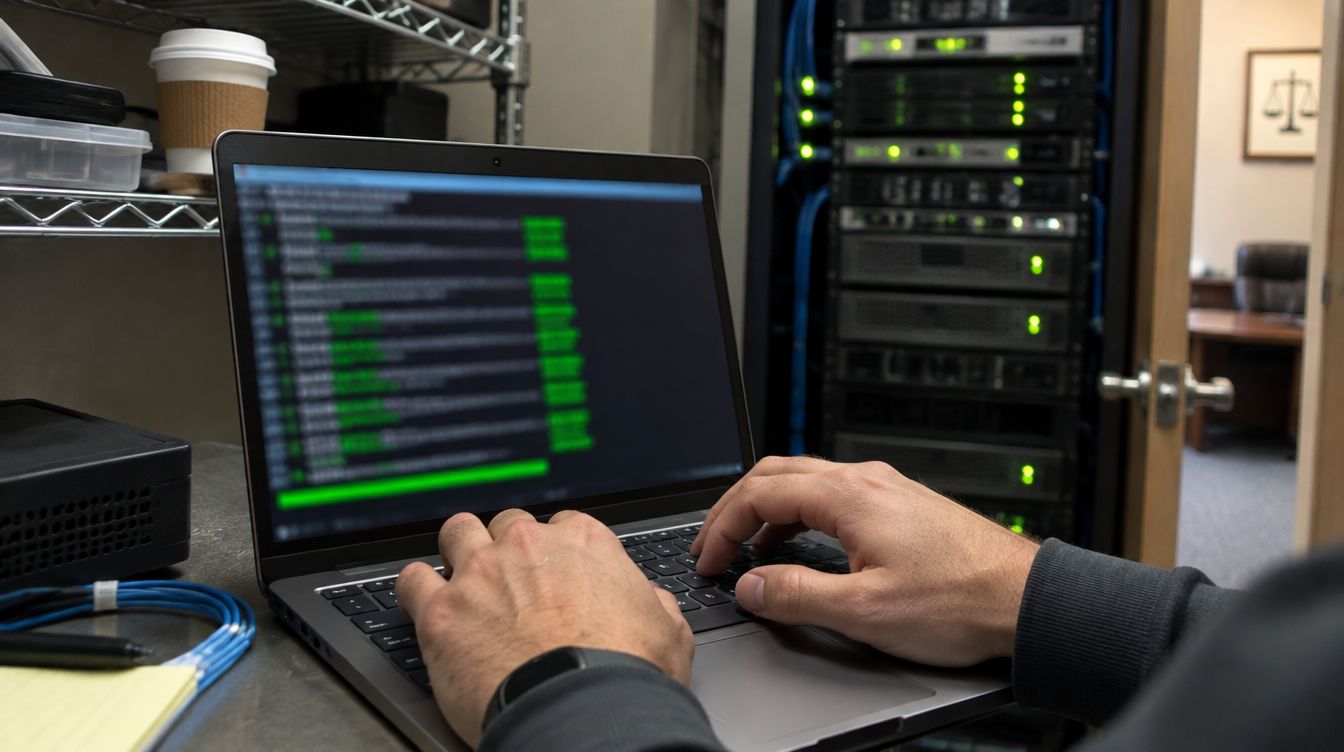
Where the server stays in the office, ClearMax technicians build it in the new closet ahead of the move, bring the data across, and have people open real files from their own desks before anyone depends on it. Workstations arrive ready for the person who will use them, with email, printers and scanning set up. Machines that leave the firm are listed, and their drives are wiped or destroyed with the date written down.
Licenses and accounts are bought in the firm's name and stay there. Practice, billing and document software remain with their makers; the buildout prepares the office for them.
Why New York rules make the record worth keeping
New York puts the duty into the text of its confidentiality rule. Rule 1.6(c) of the New York Rules of Professional Conduct says a lawyer shall make reasonable efforts to prevent the inadvertent or unauthorized disclosure or use of, or unauthorized access to, information protected by Rules 1.6, 1.9(c) or 1.18(b). A buildout settles several of those efforts for the length of the lease: who can open the file room, whether a visitor's laptop can reach the firm's printers, whether the hallway camera can see through the glass into a meeting.
State business law points the same way. General Business Law 899-bb requires a person or business that owns or licenses computerized data that includes private information of a New York resident to develop, implement and maintain reasonable safeguards. The statute speaks of administrative, technical and physical safeguards. Doors, cameras and a locked closet are part of the physical side, and only part: no installation satisfies the statute on its own, and nothing on this site is legal advice. What a firm needs is a matter for its own counsel. What it can have from the buildout is a clear account of what was put in.
The notice side reaches a firm that holds private information as the statute defines it, such as names together with Social Security, driver's license or account numbers. General Business Law 899-aa says any person or business which owns or licenses computerized data which includes private information shall disclose any breach of the security of the system. If a firm ever has to work out what was reached and when, readable door logs and camera footage held long enough are the difference between an answer and a guess.
Building in Manhattan and the other boroughs
The building runs the job as much as the contractor does. Office towers set their own rules for contractors: when work that makes noise may happen, how freight elevators are booked, who may open ceilings in common corridors, and what paperwork the managing agent needs before anyone starts. Those rules are read at the start, because they can move a schedule further than any permit.
The electrical side is permitted. The NYC Department of Buildings says no installation and modification to any electrical systems can be performed without a permit. The Department's definition of electrical work takes in wiring for signaling, communication, alarm and data transmission, so the job's permit filings cover the cabling and door wiring as well as new power for the closet and screens, and the schedule allows for it.
Doors have their own section. New York City has its own building code, separate from the state's. Section 1010.1.9.8 of the 2022 NYC Building Code, among other listed conditions, permits sensor-released electric locks in Group B buildings and on entrance doors to tenant spaces, with a manual unlocking device 40 to 48 inches above the floor within 5 feet of the doors. A law office's front door is exactly that kind of door, and its lock is chosen from that section.
Firms on more than one floor. Many New York firms take two or three floors in the same building. Each floor gets its own closet or a planned link between them through the building's risers, agreed with the landlord, so the two halves of the firm behave as one office.
Small firms and the safeguards statute
Most firms this site is written for are small businesses in the statute's sense. General Business Law 899-bb defines a small business partly as one with fewer than fifty employees and lets its safeguards be appropriate for its size and complexity. The plan is scaled the same way: the doors, cameras and network separation that suit a twelve-person office, not a bank's data center.
One scope instead of four contractors
A typical move brings a cabling contractor, an alarm or access company, a camera installer and an IT provider, each with its own drawing and its own idea of where the closet goes. Cameras arrive with no switch ports left. The door controller has no network drop. The conference room screen goes up on a wall with nothing behind it. On the first morning each contractor explains why the problem belongs to someone else.
One written scope closes that gap. The same team plans the cabling, doors, cameras and closet together, checks that the switch can power every access point and camera, and tests the whole office as one system. After handover the firm can add a managed IT plan, with monitoring and cybersecurity, or keep the records and call when the next project comes along. The buildout is priced the same either way.
Reaching ClearMax Labs
- Phone
- Weekdays, 8:00 AM to 5:00 PM Eastern, at (929) 456-8047.
- Form
- Any time, on the contact page. Replies go out the next business day.
- Work on site
- Arranged around the building's contractor hours, the general contractor's schedule and the firm's court calendar, including nights and weekends.
What New York firms ask before they start
When does IT need to be in the lease conversation?
Before the space plan is final. Moving a closet or a run of jacks on paper is quick; moving it after the walls are built is not.
Can the work be done while the office stays open?
Yes. Noisy work and the final switch-over are booked after hours, one room or one door at a time, within the building's rules.
Does the building need to approve anything?
Usually the work hours, the freight elevator, anything in a common corridor and any change to the entrance door. Those approvals are part of the plan.
What does a quote need?
The floor plan, headcount, the move or opening date, and what is coming from the old office. Send what exists and the reply asks for the rest.
How is the price set?
From the details the firm provides. If the job turns out larger than described, the firm is told before any extra work and the bid is revised.